
Multi-Channel Marketing for Education Brands: Why Social Media Alone Isn't Enough
Social media deserves a place in every K-12 marketing strategy, but it shouldn't carry the entire load. According to the Content Marketing Institute, 89% of B2B marketers use organic social media, but 84% also invest in blogs and 71% distribute content through email newsletters. The most effective marketing programs reach educators across multiple channels, not just one.
A strong multichannel marketing strategy helps education brands connect with their target audience wherever they spend time, from search engines and email to conferences and social media. Spreading your marketing efforts across multiple touchpoints also creates a more reliable pipeline when algorithms, platforms, or audience behavior inevitably change.
In this post, we'll cover:
What multichannel marketing is and how it differs from omnichannel marketing
Why a multi-channel social media strategy should support a broader marketing plan
The marketing channels that help K-12 brands reach educators and decision-makers
How multichannel content creation improves efficiency and extends the value of every campaign
Practical ways to measure success and refine your strategy over time
What Is Multi-Channel Marketing?
Multichannel marketing is the practice of reaching your audience through multiple platforms and marketing channels. That often includes email, SEO, content marketing, paid advertising, social media, webinars, conferences, and other traditional marketing channels.
A successful multi-channel marketing strategy gives each channel a defined purpose. Email nurtures leads. Blogs generate organic traffic. Social media builds awareness and community. Events create face-to-face connections. Together, these efforts strengthen brand visibility, improve audience engagement, and support measurable business goals.
Many organizations also compare multichannel with omnichannel marketing. The difference is simple. Multichannel marketing focuses on maintaining a presence across different channels, while omnichannel marketing emphasizes a consistent customer experience as people move between them.
A well-planned multi-channel social media strategy supports the broader marketing effort instead of replacing it.
Why Social-Only Marketing Falls Short for Education Brands
Social media remains an important part of channel marketing, but it works best alongside other outreach efforts. A multi-channel social media strategy helps education brands reach different audiences at different stages of the buying journey. Relying on a single platform limits visibility, weakens long-term audience engagement, and makes your marketing vulnerable to factors outside your control.
Algorithm Changes Reduce Organic Reach
Social media algorithms constantly evolve, changing which posts users see and when they see them. Content that performs well today may struggle to gain traction a few months later as platforms adjust ranking signals and prioritize new content formats.
Organic reach has also declined over time. According to Hootsuite, brands increasingly rely on paid promotion as platforms prioritize content from creators, communities, and advertisers over organic business posts.
As a result, a strong multi-channel social media management strategy supports social media with email, SEO, and other marketing channels your organization owns, rather than relying on algorithms alone.
Platforms and Audiences Change
Social platforms don't stand still. TikTok has faced ongoing regulatory uncertainty in the U.S., X (formerly Twitter) has undergone major changes since 2022, and Meta continues introducing new features, including expanded verification programs and evolving discovery algorithms. Organizations that rely heavily on one platform risk losing visibility when those platforms change.
Education organizations also serve different audiences. Classroom teachers often discover ideas on Instagram, Pinterest, and Facebook communities, while district leaders, curriculum directors, and purchasing committees are more likely to engage through email, industry publications, conferences, and professional networks like LinkedIn.
A broader multichannel marketing strategy helps organizations reach each audience through the channels they already use instead of depending on a single social channel marketing approach.
Education Purchasing Decisions Take Time
Few schools purchase new products or services after seeing a single social media post. Most buying decisions involve research, internal discussions, demonstrations, budget reviews, and stakeholder approval.
That's why successful multichannel marketing extends beyond social media. Educational blogs answer common questions, email campaigns nurture relationships, webinars build credibility, and conferences create valuable face-to-face conversations. Together, these touchpoints create a stronger path from awareness to conversion than any single platform can provide.
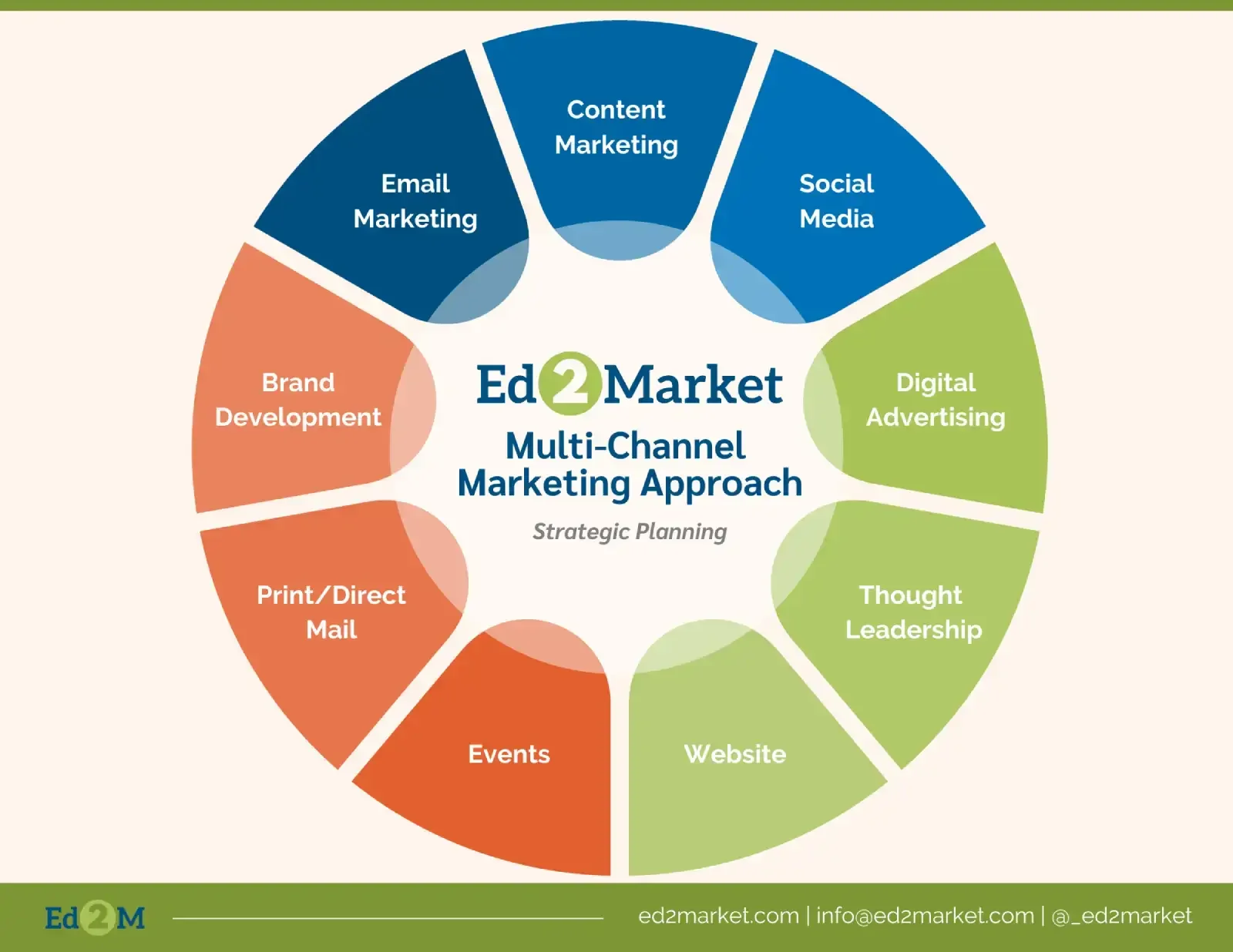
The 9 Channels in a Strong Education Multi-Channel Strategy
A successful multichannel marketing strategy reaches educators through a mix of owned, earned, and paid channels. Each serves a different purpose, but together they create more opportunities to build trust, generate leads, and support long-term growth.
1. Email Marketing
Email remains one of the most effective digital marketing channels because it gives organizations direct access to their audience. Unlike social media, email lists are owned assets that aren't affected by changing algorithms. Audience segments such as teachers, administrators, and curriculum directors can each receive messaging tailored to their interests and needs.
Email also works well alongside multichannel content marketing by promoting new blog posts, webinars, research reports, and product updates.
2. Content Marketing and SEO
High-quality content marketing helps education brands appear when educators actively search for solutions online. Educational resources, case studies, guides, and blogs continue generating website traffic long after they're published.
A strong multichannel content strategy uses SEO to attract new visitors while supporting email, paid advertising, and social media with valuable resources worth sharing.
3. Social Media
Social media plays an important role in building awareness, engaging educators, and sharing timely updates. LinkedIn is valuable for reaching district leaders and administrators, while Instagram, Facebook, and Pinterest often perform well for brands marketing directly to classroom teachers.
Effective multi-channel social media management keeps messaging consistent across different platforms while adapting content to each audience. Rather than posting the exact same content everywhere, tailor platform-specific content to match how users interact with each channel.
4. Paid Advertising
Paid advertising helps education brands reach highly targeted audiences and generate qualified leads more quickly. Google Search Ads capture educators actively researching solutions, while LinkedIn Ads allow marketers to target specific job titles, school districts, and professional roles.
Paid campaigns also provide valuable customer data that helps refine future marketing campaigns and improve conversion rates.
5. Thought Leadership and Public Relations
Publishing guest articles, appearing on education podcasts, and earning media coverage strengthen credibility with educators and school leaders. These efforts increase brand visibility while introducing your organization to audiences who may not discover you through search or social media alone.
Thought leadership also reinforces your broader multichannel content marketing strategy by giving you valuable content to repurpose across multiple channels.
6. Your Website
Every marketing channel should point back to your website. It's where prospective customers learn about your organization, download resources, request demonstrations, or contact your team.
An optimized website also supports multichannel content creation by serving as the central hub for blogs, landing pages, videos, downloadable resources, and other digital assets.
7. Conferences and Events
Education conferences continue to be valuable opportunities for relationship building. National events like ISTE and regional conferences allow companies to demonstrate products, answer questions, and connect directly with educators and district leaders.
These face-to-face interactions often complement your digital marketing efforts, helping move prospects further through the buying process.
8. Print and Direct Mail
While digital marketing dominates many industries, print still has a place in education. Direct mail and conference materials may support broader outreach depending on your target market.
Offline tactics work best when they're integrated with your broader multi-channel strategy instead of operating independently.
9. Brand Development
Every interaction should reinforce your organization's brand identity. Consistent visuals, messaging, and tone make it easier for educators to recognize and remember your company across various channels.
Whether someone discovers your organization through search, email, conferences, or social media, maintaining a consistent presence builds familiarity and trust over time.
How to Build a Multi-Channel Marketing Strategy for Education
A successful multichannel marketing strategy starts with a clear plan. Rather than trying to manage every platform at once, focus on the channels that best align with your audience, goals, and available resources. As your marketing efforts grow, expand into additional marketing channels while maintaining consistent messaging across every touchpoint.
Identify Your Target Audience
Different audiences consume content in different ways. Classroom teachers, district administrators, curriculum directors, and school leaders each have unique priorities, buying behaviors, and preferred communication channels.
Understanding your target audience makes it easier to choose the right digital marketing channels, create relevant content, and deliver the right message at the right time.
Match Channels to the Customer Journey
Not every channel serves the same purpose. Search engines and content marketing often introduce new audiences to your brand, while email marketing nurtures relationships and paid advertising supports lead generation. Conferences, webinars, and product demonstrations help prospects evaluate solutions before making a decision.
Mapping each channel to a specific stage of the buyer's journey creates a more effective multichannel strategy and improves customer engagement over time.
Start Small and Build
You don't need to launch campaigns on every platform immediately. Many organizations see better results by focusing on two or three high-performing marketing channels before expanding.
As your multi-channel marketing program matures, add new channels based on performance data, customer feedback, and evolving audience expectations.
Create a Content Calendar
A shared content calendar keeps teams aligned and helps maintain a consistent presence across multiple platforms. Planning content in advance also makes it easier to support product launches, events, seasonal campaigns, and industry news without scrambling to publish at the last minute.
Your marketing team should review the calendar regularly to balance resource utilization, coordinate campaigns, and avoid duplicate content creation efforts.
Track Performance and Optimize
Measuring results is just as important as publishing content. Monitor website traffic, conversion rates, email engagement, click-through rates, and other key performance indicators to understand which channels deliver the strongest results.
Review performance regularly and adjust your multichannel marketing campaigns based on real data instead of assumptions. Continuous optimization helps improve ROI while keeping your strategy aligned with changing audience behavior.
Multichannel Content Creation: Create Once, Publish Everywhere
Multichannel content creation helps education brands get more value from every asset they produce. A single blog post can support email campaigns, LinkedIn updates, webinars, short-form videos, and other content across various channels.
Rather than publishing the same content everywhere, adapt it into platform-specific content that matches each audience and platform. This approach strengthens your multichannel content strategy while maintaining consistent messaging and brand voice.
Content management systems, scheduling platforms, and AI tools also simplify master multichannel publishing by organizing digital assets and streamlining content operations. Repurposing existing content instead of starting from scratch helps optimize content, improve content delivery, and make every multichannel content marketing strategy more efficient.
Frequently Asked Questions About Multi-Channel Marketing
What is multi-channel marketing?
Multichannel marketing is the practice of reaching your target audience through multiple channels, including email, social media, search engines, paid advertising, events, and your website. Diversifying your marketing channels helps reduce reliance on any single platform while creating more opportunities to connect with prospective customers.
Why shouldn't education brands rely only on social media?
Social media is valuable, but it's only one part of a successful multichannel marketing strategy. Algorithm updates, declining organic reach, and changing audience behavior can all affect performance. Supporting your multi-channel social media strategy with email, SEO, events, and other channels creates a more stable and sustainable marketing program.
How many marketing channels should I use?
Start with two or three channels that align with your audience and business goals. Many K-12 organizations begin with email marketing, content marketing, and LinkedIn before expanding into additional digital marketing channels as their marketing efforts grow.
What is multi-channel social media management?
Multi-channel social media management is the process of planning, publishing, and measuring content across multiple social media platforms from a single strategy. Rather than treating every platform the same, it tailors messaging to each audience while maintaining a consistent brand voice.
Build a Stronger Multi-Channel Marketing Strategy
Social media remains an important tool for education brands, but it shouldn't be the only one. The most effective organizations build relationships across email, search, events, paid advertising, and social media, creating more opportunities to engage educators throughout the buying journey.
At Ed2Market, we help K-12 companies develop data-driven multichannel marketing programs that generate qualified leads and support long-term growth. Whether you're refining your Marketing Strategy for Education Brands, looking for an Education Marketing Agency for K-12 Companies, Building the Foundation of a new campaign, or Optimizing Your K-12 Marketing Strategy, our team can help you reach the right audience through the right mix of channels.
Ready to strengthen your marketing strategy? Contact Ed2Market today to build a customized multi-channel marketing plan.

Last updated: July 17, 2026
Author Name: Katie Stoddard
Katie Stoddard is the President and Founder of Ed2Market. With a background in teaching and 15+ years in education marketing, she helps brands connect with schools and educators.